If you rent out property in Crawley — whether it’s a single flat near the town centre or a small portfolio across West Sussex — plumbing responsibilities are one of the areas where getting it wrong gets expensive. Tenants have strong legal protections, and the line between “landlord’s problem” and “tenant’s problem” isn’t always where landlords expect it to be.
This guide covers the essentials in plain English. (It’s general information, not legal advice — for complex disputes, speak to a solicitor or your letting agent.)
The basic rule: structure and systems vs misuse
Under Section 11 of the Landlord and Tenant Act 1985, landlords are responsible for keeping in repair:
- The structure and exterior of the property
- The installations for the supply of water, gas and electricity — which includes pipework, water tanks, boilers and radiators
- Sanitation installations — basins, sinks, baths, toilets and the pipework serving them
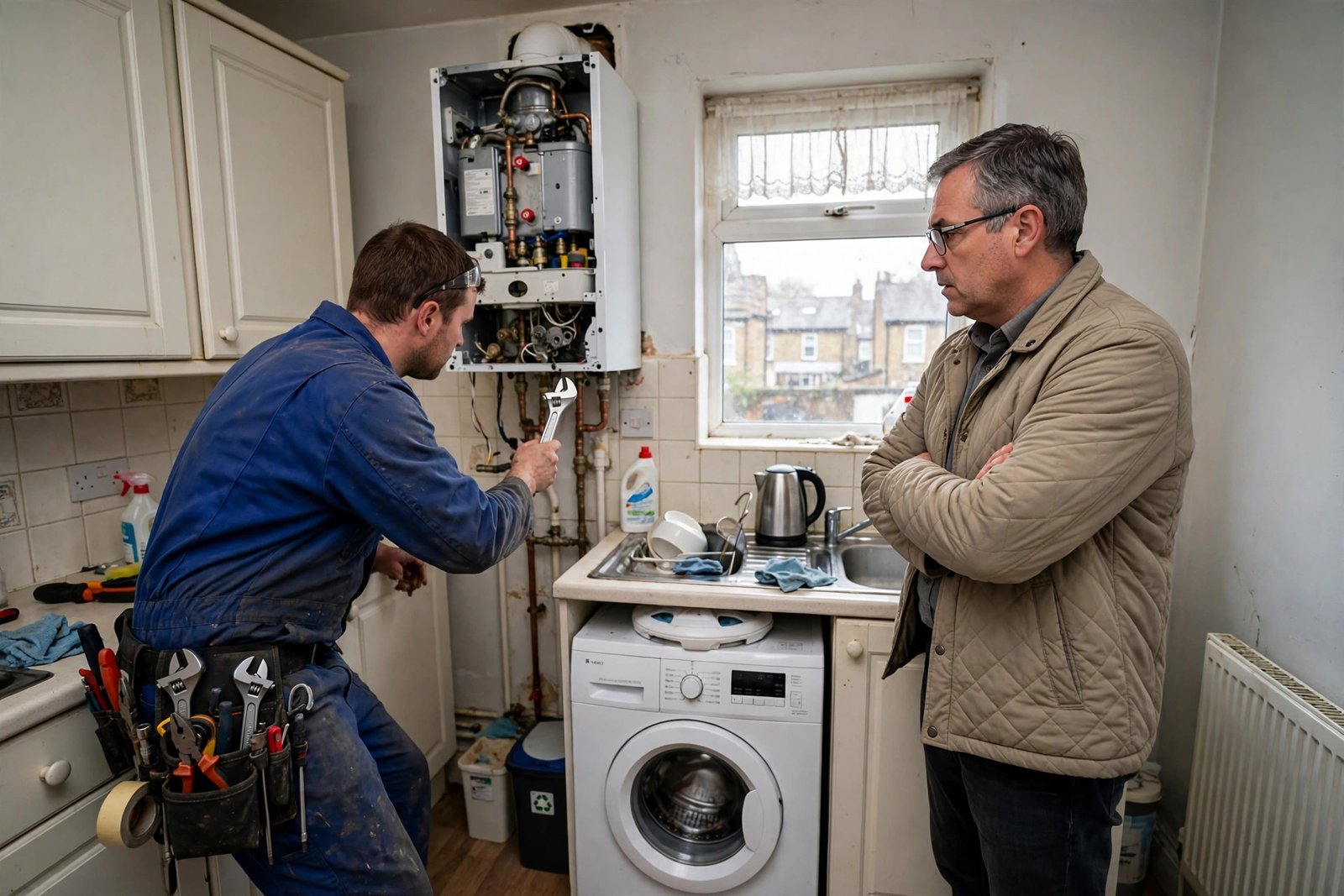
In practice, this means the plumbing system itself is your responsibility: pipes, the boiler, radiators, the hot water cylinder, taps, toilets, baths and sinks, and the drains serving the property. If a pipe bursts, the boiler breaks down, the toilet stops flushing, or a tap fails through wear and tear, that’s on you.
The tenant’s responsibility is narrower: using the property properly and not causing damage. If a tenant blocks the toilet by flushing something they shouldn’t, or breaks a tap through misuse, the cost of putting it right can fall to them. But the default position — and the one the courts take — is that the landlord maintains the systems. “The tenant should have reported it sooner” doesn’t transfer a repair duty to them.
Important: your tenancy agreement can add to your obligations, but it can’t take away the Section 11 duties. Any clause claiming the tenant is responsible for plumbing repairs is unenforceable.
Gas safety: non-negotiable
If the property has gas, you must:
- Have all gas appliances, pipework and flues safety-checked every 12 months by a Gas Safe registered engineer
- Give the tenant a copy of the gas safety certificate (CP12) within 28 days of the check, or before they move in for new tenancies
- Keep records of each check for at least two years
There is no grace period and no exemption for “the boiler was fine last year”. Failing to hold a valid gas safety certificate is a criminal offence, can invalidate a Section 21 eviction, and — most importantly — puts lives at risk. Carbon monoxide from a faulty boiler kills.
Book the annual check before the certificate expires, not after. If you’re unsure whether your boiler is showing warning signs between services, our guide to boiler warning signs explains what to watch for.
Responding to repairs: what “reasonable time” means
The law says repairs must be done within a “reasonable” time, and what counts as reasonable depends on the severity:
- Emergencies — burst pipes, major leaks, no hot water or heating in winter, sewage backing up — need a response within 24 hours, and often the same day. A burst pipe flooding a flat can’t wait until Monday.
- Urgent but not dangerous — a broken toilet (where there’s only one), a significant leak — within a few days.
- Routine — a dripping tap, a slow drain — within a couple of weeks is generally acceptable.
Tenants must give you access to carry out repairs, but you must give at least 24 hours’ written notice except in genuine emergencies. And if you fail to act, tenants can report you to the council’s environmental health team, arrange the repair themselves and bill you, or in serious cases claim compensation.
For Crawley landlords, the practical lesson is simple: have a reliable plumber on speed dial before the emergency happens. When a tenant calls at 11pm about water coming through the ceiling, you don’t want to be comparing quotes.
HMOs: extra duties
If you operate a House in Multiple Occupation (HMO) in Crawley — three or more tenants from more than one household sharing facilities — additional rules apply. HMOs need a licence from Crawley Borough Council, and the management regulations impose specific duties on plumbing and sanitation:
- Adequate numbers of bathrooms, toilets and washbasins for the number of occupants
- Hot and cold water supplies maintained in good working order
- Drainage kept clear and in repair
- More frequent inspection expectations, since shared facilities wear faster
HMO plumbing takes heavier use than a single-let, so preventative maintenance — regular checks on shared bathrooms, prompt attention to slow drains — pays for itself many times over.
Keep records of everything
Good record-keeping is one of the cheapest forms of protection a landlord has. Keep:
- Gas safety certificates for every year of the tenancy (minimum two years)
- Invoices and reports for all plumbing and heating repairs
- Records of when issues were reported and when they were fixed
- Boiler service history
If a deposit dispute or disrepair claim ever arises, this paper trail is your evidence that you acted promptly and properly. Ask your plumber for itemised invoices on every job — a professional will provide them as standard.
How a reliable local plumber keeps landlords compliant
The landlords who sleep well at night have one thing in common: a trusted local plumber they can call for everything from annual boiler services to 2am emergencies. What that relationship gives you:
- Annual servicing scheduled for you — gas safety certificates and boiler services booked before they expire, so compliance never lapses.
- Fast emergency response — a burst pipe or heating failure dealt with within hours, protecting your property and keeping you on the right side of “reasonable time”.
- Familiarity with your properties — an engineer who knows your boiler, your pipework and your properties’ quirks diagnoses problems faster.
- Proper documentation — itemised invoices and service reports that build your compliance paper trail automatically.
- Honest advice on big decisions — like whether that 15-year-old boiler should be repaired again or replaced before it fails mid-tenancy. Our guide on when to call an emergency plumber helps you judge urgency from the tenant’s description.
For landlords with several properties, ask about priority or contract arrangements — many plumbers offer preferential rates and guaranteed response times for regular landlord clients.
Plumb Buster: the landlord’s plumber in Crawley
Plumb Buster works with landlords across Crawley, Horsham, Horley and East Grinstead — from single-property landlords to portfolio owners. We’re open 24 hours, so when a tenant calls with an emergency, we respond fast. Annual boiler servicing, gas safety checks, emergency repairs, leak detection and full plumbing services — one number covers it all.
Call 07908 948654 any time, day or night, to discuss your properties or book a service. Or reach us through our contact page — and read more about us to see why Crawley landlords trust us with their properties.