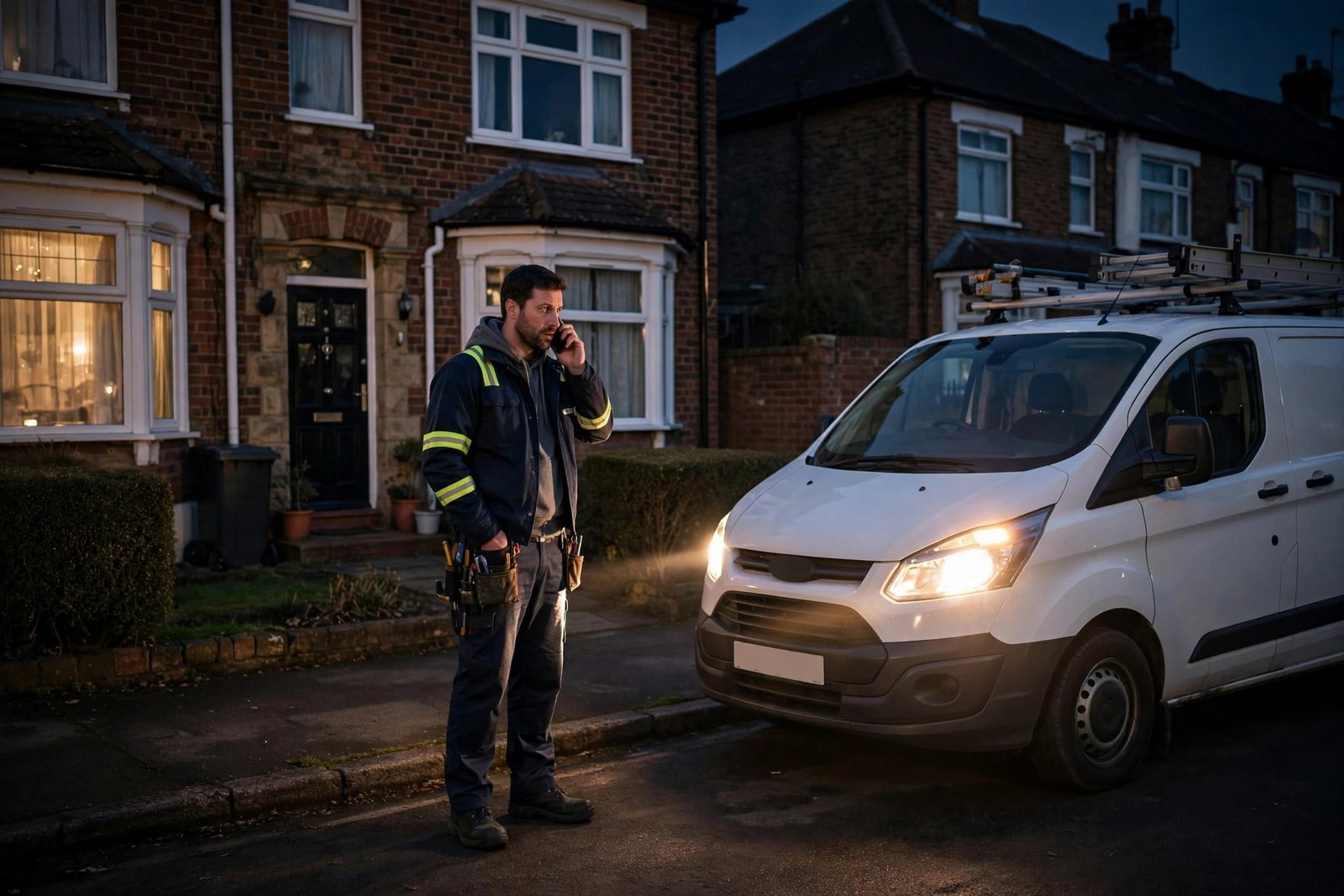
Plumbing problems have a habit of striking at the worst possible time — 11pm on a Sunday, or an hour before the in-laws arrive. The question is always the same: is this an emergency, or can it wait until morning? Get it wrong one way and you pay a call-out premium you didn’t need; get it wrong the other way and a small leak becomes a ruined ceiling.
Here’s how to tell the difference.
True Emergencies: Call Now, Whatever the Time
These situations cause active damage, pose health risks, or leave your home without essentials. Don’t wait.
A burst pipe. Water is flowing where it shouldn’t and you can’t fully stop it. Even if you’ve managed to turn off the water supply, the repair itself usually can’t wait — especially if the stopcock won’t hold or the leak is before it. Follow our 7 emergency steps for burst pipes first.
Sewage backing up. Toilets, sinks or drains pushing foul water back into your home is a health hazard, full stop. It won’t fix itself, and every flush or tap run makes it worse. Call immediately.
No hot water or heating in winter. In the depths of a cold snap, a home with no heating becomes unsafe surprisingly fast — particularly for babies, elderly people, or anyone with health conditions. If the boiler has died in January, that’s an emergency.
Major water leak you can’t isolate. If water is coming through ceilings, running down walls, or pooling on floors and you can’t find or reach the stopcock, you need a professional on site. Water damage costs rise fast — plaster, flooring, electrics.
Gas smell near pipework. Important: this is NOT a plumber’s job. If you smell gas, call the National Gas Emergency Service on 0800 111 999 immediately, open windows, and don’t touch any switches. A Gas Safe registered engineer — not a general plumber — handles gas.
Problems That Can Usually Wait Until Morning
Not everything that drips or gurgles needs a midnight call-out. If none of the above applies, these can almost always wait for normal working hours at standard rates (see our 2026 emergency price guide):
A dripping tap. Annoying, wasteful, and worth fixing — but a drip into a sink isn’t an emergency. Put a container under it and call during the day. Read about dripping tap causes and fixes meanwhile.
A slow-draining sink or bath. Inconvenient, but if water is still going down and nothing is overflowing, it can wait. Don’t use chemical drain cleaners overnight — they can damage pipes and make the plumber’s job harder later.
A running toilet. If the cistern is constantly refilling but the bowl isn’t overflowing, turn off the toilet’s isolation valve (usually behind or below the cistern) and book a daytime visit. See running toilet causes and fixes.
Low water pressure. Irritating in the shower, but not an emergency unless it’s a sudden, total loss of water — which suggests a burst main and does need urgent attention.
A single blocked drain (no overflow). If one drain is sluggish but nothing is backing up into the house, wait for morning. If multiple drains back up at once, that’s a main-line problem — treat it as urgent.
The Grey Area: When Waiting Carries Risk
Some problems sit in between. A small but steady leak under a sink, for example, won’t flood the kitchen tonight — but overnight it can soak through a cabinet, the floor, and the ceiling below. Ask yourself:
- Is water going somewhere it shouldn’t? If yes, lean towards calling.
- Is it getting worse? A leak that’s growing, a stain that’s spreading, a smell that’s strengthening — don’t sleep on it.
- Can you contain it until morning? A bucket under a slow drip and a towel at the door is fine. Water you can’t control isn’t.
- Who’s in the house? With vulnerable people at home, err on the side of caution.
What Information to Give When You Call
Whether it’s 3pm or 3am, you’ll get faster, better help if you have this ready:
- What’s happening — “water coming through the kitchen ceiling” beats “plumbing problem.”
- Where the water is coming from, if you know.
- Whether you’ve turned the water off — and if not, why not (can’t find the stopcock, it’s seized, etc.).
- Whether electrics are affected — water near sockets or the fuse box changes how the plumber approaches the job.
- Your address and a contact number, plus any access notes (gated road, flat number, parking).
The more the plumber knows, the more likely they are to bring the right parts and fix it in one visit.
The Cost Question
Emergency call-outs cost more than daytime work — that’s the trade-off. But compare the premium against the cost of waiting: a £200 emergency visit tonight versus soaked floorboards, a collapsed ceiling, and a mould problem next month. When water is actively damaging your home, the emergency call is almost always the cheaper option in the long run.
Unsure whether it’s an emergency? Call Plumb Buster on 07908 948654 — we’re open 24 hours across Crawley, Horsham, Horley and East Grinstead, and we’ll give you an honest answer. If it can wait, we’ll tell you so and book you in at standard rates. If it can’t, our emergency plumbers will be on their way. Learn more about us or contact us online.