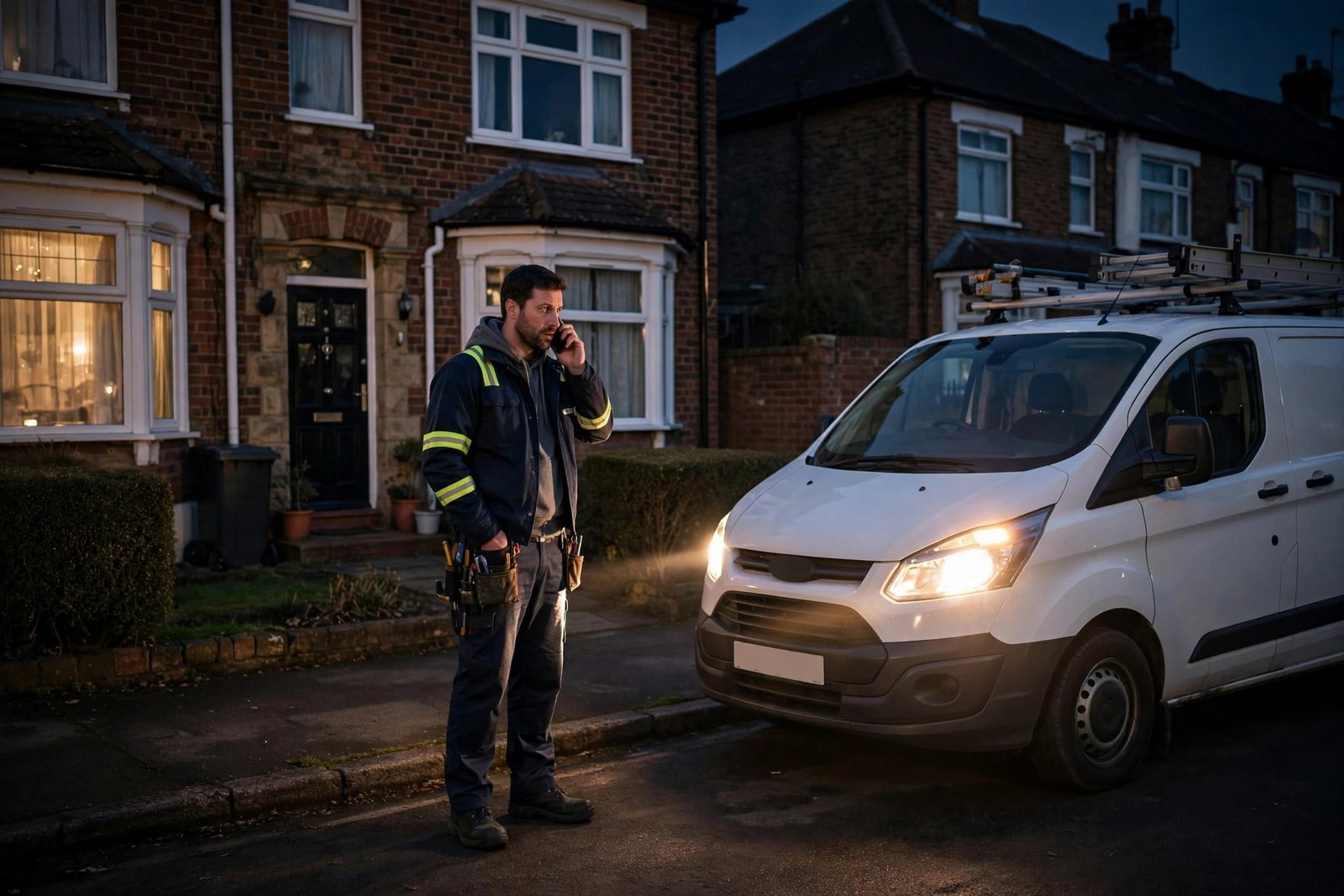
Plumbing problems have a habit of striking at the worst possible time — 11pm on a Sunday, or an hour before the in-laws arrive. The question is always the same: is this an emergency, or can it wait until morning? Get it wrong one way and you pay a call-out premium you didn’t need; get it wrong the other way and a small leak becomes a ruined ceiling. Here’s how to tell the difference. True Emergencies: Call Now, Whatever the Time These situations cause active damage, pose health risks, or leave your home without essentials. Don’t wait. A burst pipe. Water is flowing where it shouldn’t and you can’t fully stop it. Even if you’ve managed to turn off the water supply, the repair itself usually can’t wait — especially if the stopcock won’t hold or the leak is before it. Follow our 7 emergency steps for burst pipes first. Sewage backing up. Toilets, sinks or drains pushing foul water back into your home is a health hazard, full stop. It won’t fix itself, and every flush or tap run makes it worse. Call immediately. No hot water or heating in winter. In the depths of a cold snap, a home with no heating becomes unsafe surprisingly fast — particularly for babies, elderly people, or anyone with health conditions. If the boiler has died in January, that’s an emergency. Major water leak you can’t isolate. If water is coming through ceilings, running down walls, or pooling on floors and you can’t find or reach the stopcock, you need a professional on site. Water damage costs rise fast — plaster, flooring, electrics. Gas smell near pipework. Important: this is NOT a plumber’s job. If you smell gas, call the National Gas Emergency Service on 0800 111 999 immediately, open windows, and don’t touch any switches. A Gas Safe registered engineer — not a general plumber — handles gas. Problems That Can Usually Wait Until Morning Not everything that drips or gurgles needs a midnight call-out. If none of the above applies, these can almost always wait for normal working hours at standard rates (see our 2026 emergency price guide): A dripping tap. Annoying, wasteful, and worth fixing — but a drip into a sink isn’t an emergency. Put a container under it and call during the day. Read about dripping tap causes and fixes meanwhile. A slow-draining sink or bath. Inconvenient, but if water is still going down and nothing is overflowing, it can wait. Don’t use chemical drain cleaners overnight — they can damage pipes and make the plumber’s job harder later. A running toilet. If the cistern is constantly refilling but the bowl isn’t overflowing, turn off the toilet’s isolation valve (usually behind or below the cistern) and book a daytime visit. See running toilet causes and fixes. Low water pressure. Irritating in the shower, but not an emergency unless it’s a sudden, total loss of water — which suggests a burst main and does need urgent attention. A single blocked drain (no overflow). If one drain is sluggish but nothing is backing up into the house, wait for morning. If multiple drains back up at once, that’s a main-line problem — treat it as urgent. The Grey Area: When Waiting Carries Risk Some problems sit in between. A small but steady leak under a sink, for example, won’t flood the kitchen tonight — but overnight it can soak through a cabinet, the floor, and the ceiling below. Ask yourself: Is water going somewhere it shouldn’t? If yes, lean towards calling. Is it getting worse? A leak that’s growing, a stain that’s spreading, a smell that’s strengthening — don’t sleep on it. Can you contain it until morning? A bucket under a slow drip and a towel at the door is fine. Water you can’t control isn’t. Who’s in the house? With vulnerable people at home, err on the side of caution. What Information to Give When You Call Whether it’s 3pm or 3am, you’ll get faster, better help if you have this ready: What’s happening — “water coming through the kitchen ceiling” beats “plumbing problem.” Where the water is coming from, if you know. Whether you’ve turned the water off — and if not, why not (can’t find the stopcock, it’s seized, etc.). Whether electrics are affected — water near sockets or the fuse box changes how the plumber approaches the job. Your address and a contact number, plus any access notes (gated road, flat number, parking). The more the plumber knows, the more likely they are to bring the right parts and fix it in one visit. The Cost Question Emergency call-outs cost more than daytime work — that’s the trade-off. But compare the premium against the cost of waiting: a £200 emergency visit tonight versus soaked floorboards, a collapsed ceiling, and a mould problem next month. When water is actively damaging your home, the emergency call is almost always the cheaper option in the long run. Unsure whether it’s an emergency? Call Plumb Buster on 07908 948654 — we’re open 24 hours across Crawley, Horsham, Horley and East Grinstead, and we’ll give you an honest answer. If it can wait, we’ll tell you so and book you in at standard rates. If it can’t, our emergency plumbers will be on their way. Learn more about us or contact us online.
How to Turn Off Your Water Supply in an Emergency (Crawley)
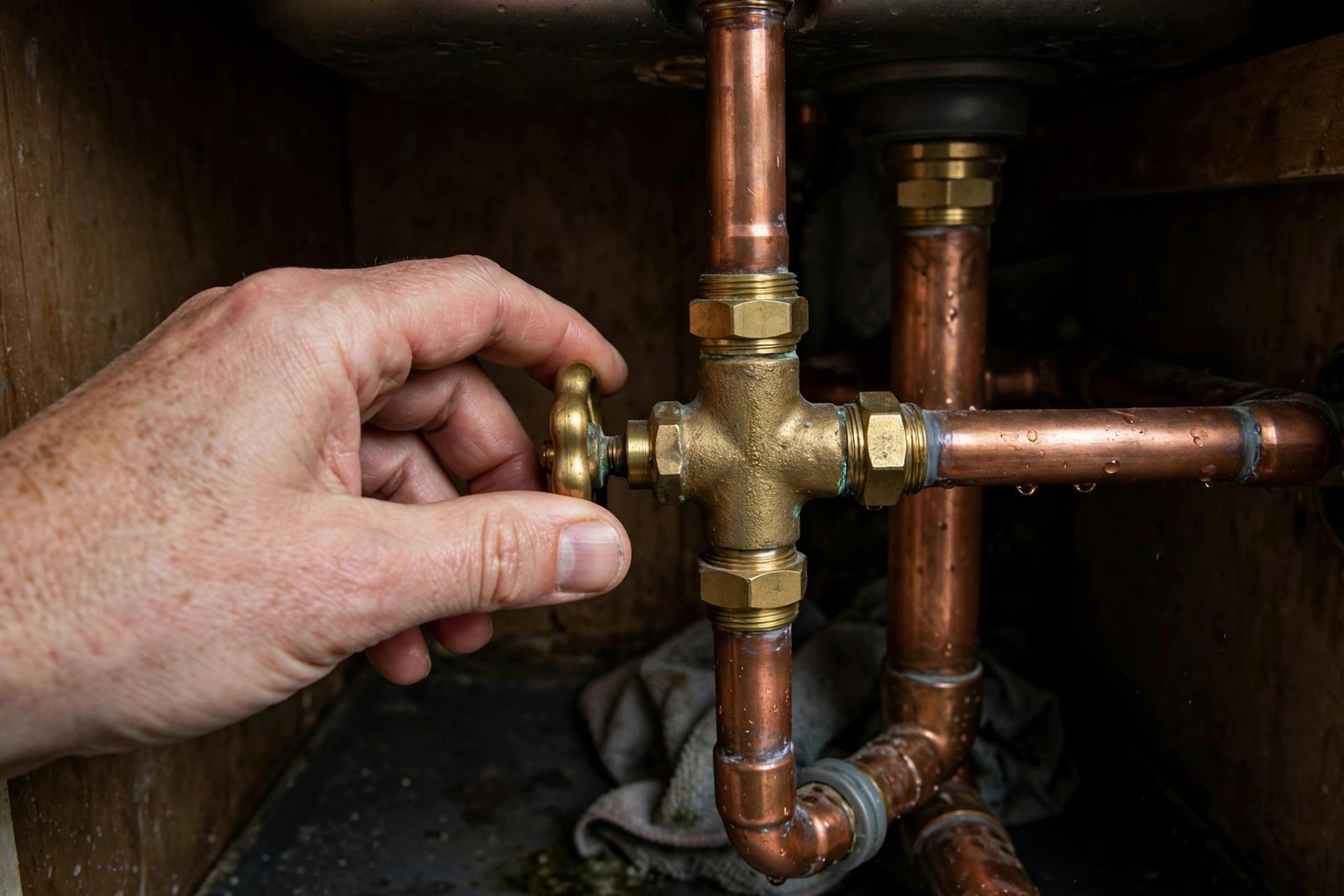
If a pipe bursts or a fitting fails, the water won’t stop until somebody stops it. Every minute of delay means more water through your floors and ceilings — so knowing how to turn off your water supply before you need to is one of the most useful things any homeowner can learn. It takes five minutes to find your stopcock on a calm Sunday afternoon, and it can save you thousands in water damage. Finding Your Indoor Stopcock Your indoor stopcock (also called a stop tap or stop valve) is the main on/off switch for all the water entering your home. In most Crawley homes, look in these places: Under the kitchen sink — the most common spot, often at the back of the cupboard In a hallway cupboard or under the stairs Near the front door, low down In the downstairs bathroom or utility room In flats, it may be in a communal cupboard on your floor, or in a service riser — check with your building manager if you can’t find it It looks like a small brass tap or a lever on a pipe coming up through the floor. If you’ve just moved into a Crawley property — particularly one of the older Victorian terraces around the town centre or the post-war semis in Tilgate and Pound Hill — make finding the stopcock one of your first jobs. How to Turn It Off Once you’ve found it: Turn it clockwise until it stops — “righty-tighty.” A traditional wheel-type stopcock needs several full turns. A lever-type just needs a quarter turn so the lever sits across the pipe (perpendicular). Run a cold tap to check — the water should slow to a trickle and stop. If it doesn’t, the stopcock isn’t fully closed or it’s faulty. If the pipe you’re trying to isolate feeds the hot water cylinder or heating, switch off the boiler too, so it isn’t heating an empty system. That’s it. You’ve just stopped the mains water to your entire home. What If the Stopcock Is Seized? This is extremely common. Stopcocks that haven’t been turned for years — or decades — seize solid. If yours won’t budge: Don’t force it with all your strength. Snapping an old stopcock can cause a flood worse than the one you’re trying to stop. Try a pair of grips or a wrench for extra leverage, gently. A squirt of WD-40 and ten minutes of patience sometimes frees a stiff valve. If it won’t move, call a plumber. A seized stopcock is a genuine problem — in an emergency you have no way to stop the water. We can free or replace it quickly; it’s a straightforward job. And here’s a tip worth its weight in gold: turn your stopcock off and on once a year. It takes thirty seconds and keeps it working for the day you actually need it. The Outside Stop Valve If the indoor stopcock fails or you can’t find it, there’s a second option: the outside stop valve on your water supply pipe, usually under a small metal or plastic cover in the pavement, driveway, or front garden. It’s the property’s boundary valve and belongs to you up to that point (your water company owns the pipe before it). You’ll typically need a long stopcock key to reach and turn it — not something most households own. In a genuine emergency, this is another reason to call a plumber fast rather than hunting around the street with a screwdriver. Note that on shared supplies (common in some older Crawley terraces), the outside valve may shut off a neighbour’s water too, so use it with care. Draining the System After Shutting Off Closing the stopcock stops new water coming in, but the pipes are still full. To drain them: Open the lowest cold tap in the house (often the garden tap or a downstairs sink) and let it run until it stops. Switch off the boiler, then open the hot taps to drain the hot water side. Flush the toilets — each cistern holds a flush or two of water. Once drained, the system is depressurised and safe for a plumber to work on — and no more water can escape from a burst pipe. Label It for the Whole Household The best stopcock in the world is useless if nobody can find it. Once you’ve located yours: Stick a clear label on the cupboard door: “WATER STOPCOCK — turn clockwise to shut off.” Show everyone in the house where it is, including teenagers and regular guests. If you’re a landlord, this is worth adding to your tenant information pack — see our guide to landlord plumbing responsibilities. Quick Recap Find your stopcock now — under the kitchen sink is the most likely spot. Turn it clockwise to shut off all water to the house. Test it once a year so it doesn’t seize. If it’s seized or missing, get it replaced before an emergency forces the issue. Water emergencies are stressful enough without hunting for a valve you’ve never seen. Five minutes today can save you a ruined kitchen tomorrow. And if the worst does happen, our emergency plumbing guide explains what the repair will cost. Stopcock seized, leaking, or missing? Plumb Buster can sort it — open 24 hours in Crawley, Horsham, Horley and East Grinstead. Call 07908 948654 for help now, or visit our services page and contact page to book a routine visit.
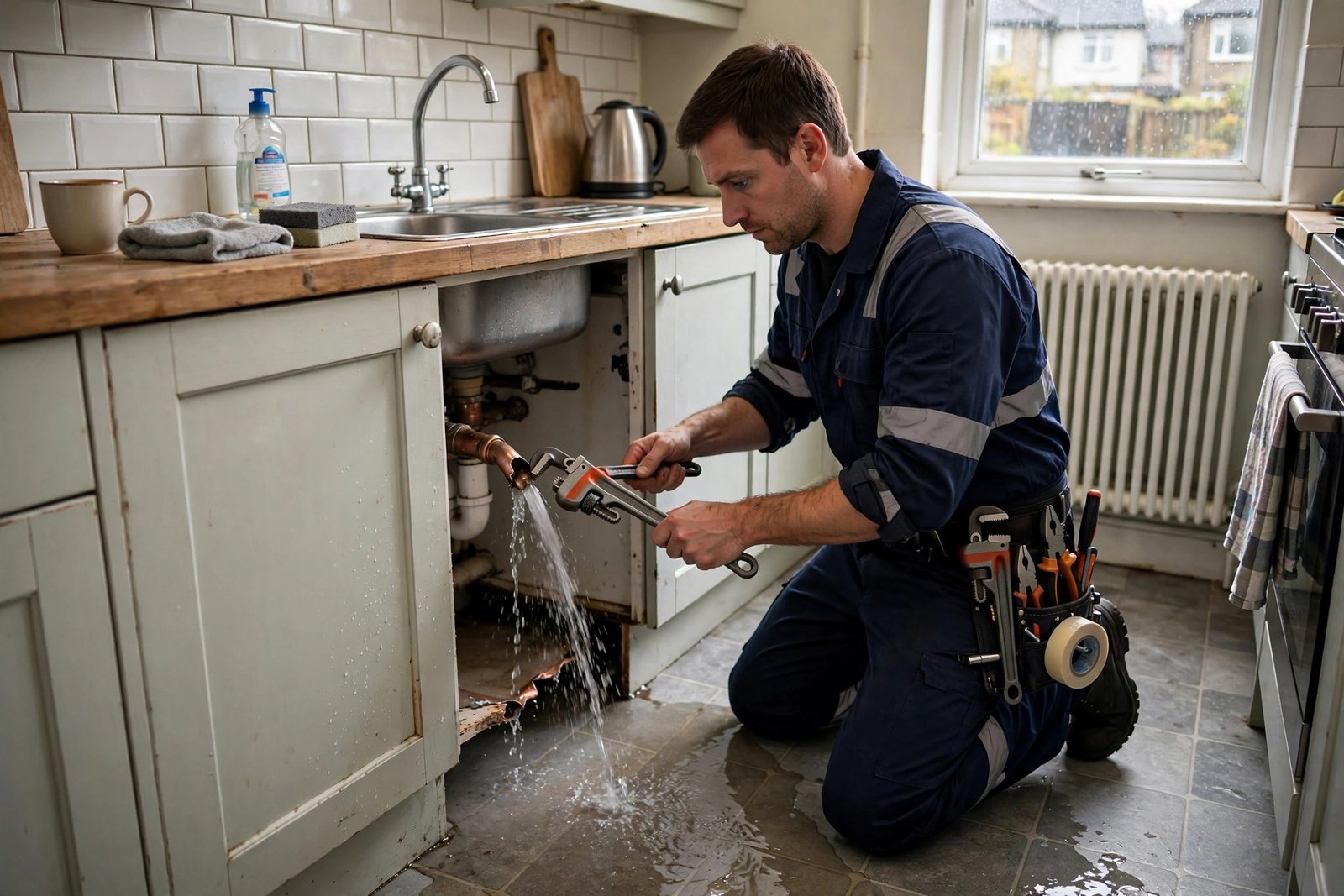
Emergency Plumber Cost Crawley 2026: What You’ll Actually Pay
It’s 2am, there’s water coming through the ceiling, and your first thought after panic is: how much is this going to cost me? Fair question. Emergency plumbing prices in Crawley follow fairly predictable patterns once you know what you’re looking at. This guide breaks down what local plumbers actually charge, what drives the price up or down, and how to make sure you’re not overpaying when you’re stressed and in a hurry. Typical Emergency Call-Out Fees in Crawley Most emergency plumbers in Crawley charge a call-out fee just for turning up. For a daytime emergency call, expect a call-out of around £100–£120. This usually covers the first hour of labour, so it isn’t an extra charge on top of everything else — it’s the starting price. Call-out fees rise with the time of day: Weekday daytime emergency: £100–£120 call-out (often includes the first hour) Evenings and weekends: £120–£160 call-out Overnight (midnight–6am): £150–£200+ call-out Bank holidays: £150–£200+, sometimes more These are Crawley-area averages for a local independent plumber, not a national franchise — the big national firms often charge significantly more for the same work. Hourly Rates: What Crawley Plumbers Charge Once the call-out is covered, expect an hourly rate of around £100 per hour for emergency work. Standard (non-emergency) plumbing in Crawley typically runs £50–£80 per hour, so the emergency premium is roughly double — you’re paying for someone being available at short notice, day or night. Some plumbers quote a fixed price for the whole job instead of an hourly rate. Fixed pricing is often better for you on emergency jobs: it removes the risk of the clock running while a problem turns out to be complicated. Average Emergency Job Cost in Crawley So what does a typical emergency plumbing job actually cost from start to finish? Based on common jobs across Crawley: Job Typical cost range Burst pipe repair (minor, accessible) £145–£275 Burst pipe repair (major, under floorboards) £250–£500+ Severe leak repair £145–£250 Blocked drain (emergency) £150–£300 Toilet repair (won’t flush / overflowing) £120–£220 No hot water / heating (plumbing fault) £150–£300 The average emergency plumbing job in Crawley lands around £200, with most straightforward jobs falling in the £145–£275 range. If a job needs major parts — a new pump, a cylinder, or extensive pipework — costs rise from there. What Affects the Price Several factors move the final bill up or down: Time of day. A Sunday-night call-out will always cost more than a Tuesday-morning one. If the problem can safely wait until morning, waiting can save you £50–£100. But never delay if water is actively causing damage — the water damage will cost far more than the premium. Parts and materials. Most common fittings (copper pipe, joints, valves) are cheap and plumbers carry them in the van. But a failed immersion heater, a split hot water cylinder, or a new boiler pump can add £100–£400+ in parts alone. Job complexity. A burst pipe under a kitchen sink is a quick fix. The same pipe buried under floorboards, behind tiles, or in a wall cavity takes longer and costs more — partly labour, partly making good afterwards. Accessibility. Crawley has a lot of Victorian terraces and converted flats where pipework is buried behind boxing-in or under solid floors. The harder it is to reach, the more the job costs. Water damage already done. If the leak has been running for hours, you’re paying for the plumbing repair plus potentially plastering, drying, and redecoration. This is why shutting off your water supply fast matters so much. How to Avoid Being Overcharged Emergency situations attract inflated pricing. Protect yourself with these steps: Get a price before they start. A reputable emergency plumber will give you a clear call-out fee and either a fixed quote or an hourly rate over the phone. If they won’t commit to any figure, that’s a red flag. Ask what’s included. Does the call-out include the first hour? Are parts extra? Are there minimum charges? Be wary of very high call-out fees. Call-outs above £200 for standard daytime emergencies in Crawley should raise eyebrows unless it’s a bank holiday or the middle of the night. Check reviews. Plumb Buster holds a 5.0 rating on Google and 383 Checkatrade reviews at 10/10 — that kind of track record is hard to fake and worth checking for any plumber you call. See our guide on how to choose a plumber in Crawley. Get the total in writing. Even a quick text message confirming the price gives you something to fall back on if the invoice looks different. When It’s Worth Paying for 24-Hour Service Nobody wants to pay a premium, but some situations justify it: Water is actively leaking into your home. Every hour of delay means more damage to floors, ceilings, and walls. A £200 emergency call tonight beats a £2,000 repair next week. Sewage is backing up. A health hazard that only gets worse. No hot water or heating in winter. Especially with children or elderly people in the house. A burst pipe you can’t isolate. If you can’t stop the water, you need someone who can — fast. If it’s a dripping tap or a slow drain and no water is going anywhere it shouldn’t, it can almost certainly wait until normal hours at standard rates. Read our guide on when to call an emergency plumber if you’re unsure. The Bottom Line Expect around £100–£120 call-out (including the first hour) and roughly £100 per hour after that, with most emergency jobs in Crawley costing £145–£275 all in. The biggest cost driver is usually the parts needed and how hard the fault is to reach. Get a clear price before work starts, check reviews, and don’t let a panicked moment turn into an inflated bill. Need an emergency plumber in Crawley right now? Plumb Buster is open 24 hours across Crawley, Horsham, Horley and East Grinstead. Call 07908 948654 and we’ll give you a clear price before we set off — no surprises.
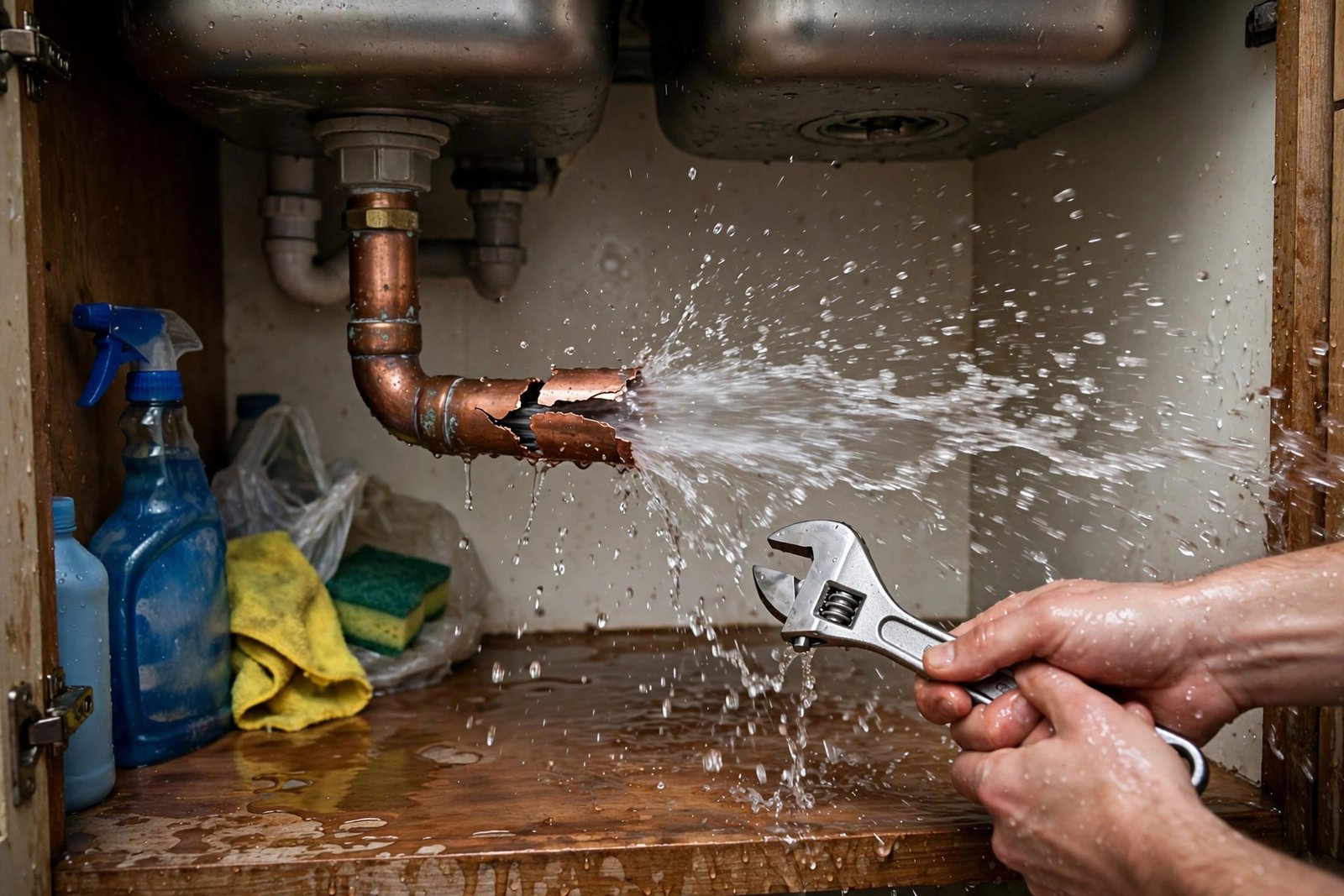
Burst Pipe? 7 Emergency Steps to Take Before the Plumber Arrives
A burst pipe can release hundreds of litres of water into your home in a matter of minutes. The damage gets worse with every minute the water keeps flowing, so the first thing you do matters far more than how fast the plumber drives. Follow these seven steps in order, then call for help. Step 1: Shut Off the Water at the Stopcock This is the single most important thing you can do. Find your indoor stopcock and turn it clockwise until it’s fully closed. In most Crawley homes it’s under the kitchen sink, in a hallway cupboard, or under the stairs. Closing it stops the flow to the burst section and turns a disaster into a manageable repair. If you don’t know where yours is, read our guide on how to turn off your water supply — find it today, not during a flood. Step 2: Switch Off the Electrics if Water Is Near Sockets or Switches Water and electricity are a lethal combination. If water is running near plug sockets, light switches, or the consumer unit, switch off the power at the fuse box immediately. Do not touch any electrical fittings with wet hands, and don’t stand in pooled water while switching anything off — if it’s not safe to reach the fuse box, get out and call for help. Step 3: Drain the Remaining Water from the Pipes Once the stopcock is closed, open all the cold taps (starting with the lowest one in the house, usually a garden tap or downstairs sink) to drain the water still sitting in the pipes. Then switch off the boiler and open the hot taps to drain the hot water system too. This stops water continuing to spill from the burst and relieves pressure elsewhere in the system. Step 4: Contain the Water Grab towels, buckets, mops — whatever you have. Push towels around the base of doors to stop water spreading into other rooms, and put buckets under active drips. If water is coming through a ceiling, move furniture and valuables out from underneath. Poke a small hole in a bulging ceiling with a screwdriver to let the trapped water drain into a bucket in a controlled way — a collapsed ceiling does far more damage than a neat hole. Step 5: Move Valuables and Protect Belongings Get rugs, electronics, documents, and anything irreplaceable off the floor and away from the affected area. Lift the bottom of curtains if water is spreading across the floor. If there’s time, roll back carpet from the edges of the wet area — wet carpet can often be saved if it’s lifted and dried quickly, but soaked underlay usually needs replacing. Step 6: Document the Damage for Your Insurance Before you start clearing up in earnest, take photos and a short video of everything: the burst pipe itself, the water, and any damaged belongings, walls, floors, and ceilings. Insurers want evidence of the cause and the extent of the damage. Note the time you discovered the leak and what you did. Most home insurance policies cover the damage caused by burst pipes (though not always the cost of the pipe repair itself), and good documentation makes the claim far smoother. Step 7: Call a 24-Hour Plumber With the water stopped and the damage contained, call a professional. When you ring, be ready to tell them: where the burst is, whether you’ve isolated the water, whether any electrics are affected, and whether the ceiling or walls are damaged. That lets them bring the right parts and give you an accurate arrival time. If you’re in Crawley, Horsham, Horley or East Grinstead, Plumb Buster’s emergency plumbing team is available around the clock — call 07908 948654 and we’ll talk you through it while we’re on our way. What NOT to Do Don’t try to solder or repair a burst pipe yourself while the system is pressurised. You won’t fix it and you’ll lose time. Don’t use electrical appliances in wet areas until everything is dry and checked. Don’t ignore a “small” burst. Even a pinhole leak in a pressurised pipe can cause serious damage behind walls and under floors over hours. If you suspect a hidden leak, our leak detection service can find it before it gets worse. Don’t turn the heating back on until the plumber has checked the system — heating an empty or damaged system can cause further problems. Temporary Fixes That Can Slow the Flow If the stopcock won’t close fully and you’re waiting for the plumber, a few stopgap measures can reduce the flow. Wrap the burst tightly with several layers of electrical tape or a purpose-made pipe repair clamp if you have one, and wedge a piece of rubber (an old inner tube or a section of garden hose split lengthways) under the tape for a better seal. These are strictly temporary — they slow the leak, they don’t fix it — but they can buy you valuable time and limit damage while help is on the way. How Burst Pipes Happen (and How to Prevent the Next One) Most bursts in Crawley happen in winter when water freezes and expands inside uninsulated pipes — lofts, garages, and outside walls are the usual suspects. Read our guides on how to prevent and thaw frozen pipes and the winter plumbing checklist to cut your risk. The typical cost of emergency plumbing is also worth knowing before you ever need it. Pipe burst in Crawley? Act fast, then call Plumb Buster — open 24 hours, 07908 948654. Our emergency plumbers cover Crawley, Horsham, Horley and East Grinstead, day and night. See who we are or get in touch to book a non-urgent visit.