Few household problems are as unpleasant as a blocked drain: water rising in the shower tray, a sink that takes an age to empty, gurgling plugholes or a smell you would rather not identify. Left alone, blockages lead to overflows and water damage.
This guide covers what causes blocked drains in Crawley homes, the DIY fixes that work, what should never go down your drains, and when to call a professional.
What causes blocked drains?
Most blockages build up gradually rather than appearing overnight. The main culprits:
- Hair and soap scum — the top cause of slow bathroom drains. Hair binds with soap residue into a dense mat inside the pipe.
- Fat, oil and grease — poured down the kitchen sink, fat cools and solidifies, trapping food until the pipe narrows. The biggest cause of kitchen blockages.
- Food waste — coffee grounds, rice, pasta and starchy foods swell and clump together in pipes.
- Wet wipes and sanitary products — even “flushable” wipes do not break down like toilet paper, and are a leading cause of serious blockages.
- Cotton buds, dental floss and small objects — they catch on pipe joints and become the seed of a bigger blockage.
- Outdoor debris — leaves, silt and, in older Crawley streets, tree roots finding their way into cracked clay drains.
Crawley’s mix of Victorian terraces and modern estates means varied problems: older homes have narrower, ageing pipework that blocks easily, while newer ones suffer grease and wipe blockages.
Signs your drain is blocked (or getting there)
Catch it early and the fix is easy:
- Water draining slowly from a sink, bath or shower
- Gurgling noises from plugholes or the toilet
- Unpleasant smells coming up from drains
- Water backing up into another fixture (e.g. the shower fills when the toilet flushes)
- The toilet water level rising higher than usual after flushing
If more than one fixture is affected at the same time, the blockage is probably in a shared branch or the main drain rather than a single trap — that is usually a job for a professional.
How to unblock a drain with a plunger
A plunger is the first tool to reach for, and technique matters more than force:
- Choose the right plunger. A cup plunger (the classic dome shape) suits sinks and baths; a flange or bellows plunger suits toilets.
- Seal the overflow. For a sink or bath, block the overflow with a damp cloth — otherwise the pressure escapes there instead of pushing the blockage.
- Cover the plunger cup with water. You need water in the basin, enough to cover the rubber cup. Plunging on air does very little.
- Plunge firmly and rhythmically. Push down, pull up sharply, and repeat 15 to 20 times without breaking the seal. The pulling action is what dislodges the blockage.
- Test the drainage. If the water drops away freely, run hot water for a minute to flush the pipe.
If three rounds of plunging change nothing, move on — endless plunging rarely helps and can damage seals.
Using a drain snake (auger)
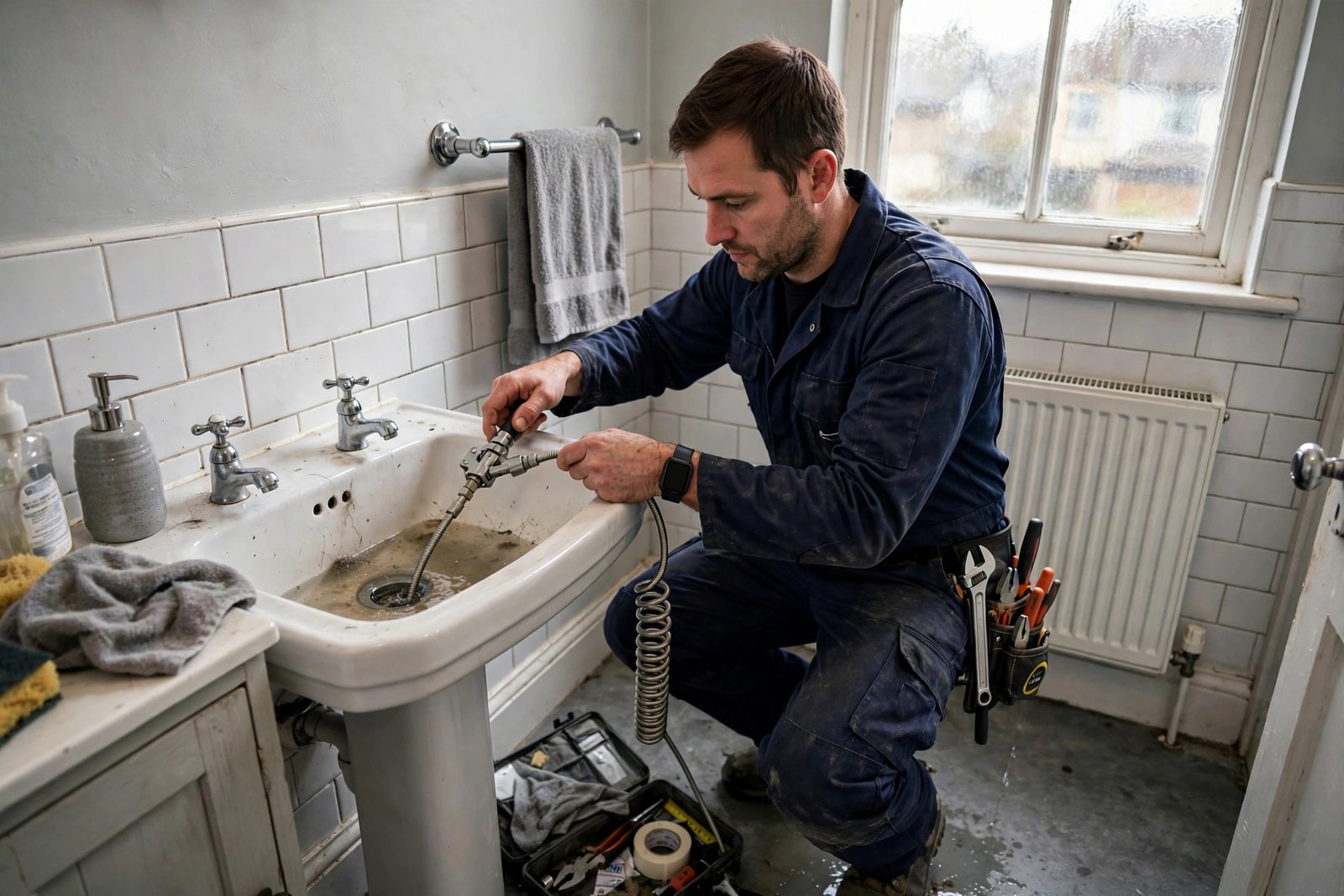
For blockages a plunger cannot shift, feed a manual drain snake into the plughole slowly; when you feel resistance, rotate the handle while pushing gently. The coil breaks through the blockage or snags it for removal. Never force it past a bend — you risk damaging the pipe.
A basic hand auger costs £15 to £25 and handles most bathroom sink and bath blockages. For toilets, use a purpose-made toilet auger with a protective sleeve so you do not scratch the porcelain.
Baking soda and vinegar: does it work?
It helps a little with mild build-up: half a cup of bicarbonate of soda, half a cup of white vinegar, wait 15 minutes, then flush with hot (not boiling) water. The fizz loosens soap scum and grease films, but it will not shift hair mats or solidified fat — it is maintenance, not a cure. Skip it if the drain is fully blocked.
What should never go down your drains
Prevention beats cure. Keep these out of your sinks, toilets and outside gullies:
- Cooking fat, oil and grease — wipe pans with kitchen roll and bin it
- Coffee grounds
- Rice, pasta and starchy foods
- Wet wipes of any kind, including “flushable” ones
- Sanitary products and nappies
- Cotton buds, cotton pads and dental floss
- Paint, solvents and harsh chemicals
- Cat litter
A simple plughole strainer in the kitchen sink and shower catches most of the rest for a couple of pounds.
A word of caution on chemical drain cleaners
Caustic cleaners can clear minor blockages but can damage old pipework and enamel, splash back dangerously, and release toxic fumes if mixed. Follow the instructions exactly, never mix products, and tell your plumber if you used them — it matters for their safety.
When to call a professional
Call a plumber if:
- Multiple fixtures are blocked at once — the problem is in a shared pipe or the main drain.
- There is a sewage smell or sewage backing up — do not mess about with this; it is a health hazard.
- The same drain keeps blocking — recurring blockages point to a damaged pipe, root ingress or a collapsed section that needs investigating.
- Outdoor drains or manholes are overflowing — these need professional jetting equipment and sometimes a CCTV survey.
- DIY has failed — a plumber’s high-pressure water jetter clears in minutes what hours of plunging cannot, without damaging the pipe.
For a single blocked kitchen sink, the DIY steps above will usually do it — our guide to a blocked kitchen sink goes deeper on that specific problem.
Preventing blocked drains
A few habits keep drains flowing:
- Run hot water down the kitchen sink after washing up to move grease along
- Fit strainers over plugholes in sinks, showers and baths, and empty them regularly
- Bin fats and oils instead of pouring them away
- Flush only the three Ps: pee, poo and (toilet) paper
- Once a month, flush bathroom drains with hot water and a squirt of washing-up liquid
These small habits are the difference between drains you never think about and a Sunday morning spent with a plunger.
Blocked drain you cannot shift?
If the water is not going anywhere, do not wait for it to get worse — standing water and sewage back-up cause damage fast. Plumb Buster is Crawley’s local emergency plumber, open 24 hours a day, covering Crawley, Horsham, Horley and East Grinstead. Call 07908 948654 any time for blocked drains cleared properly with professional jetting equipment, or book online. For urgent problems, our emergency plumbing service is ready around the clock.