
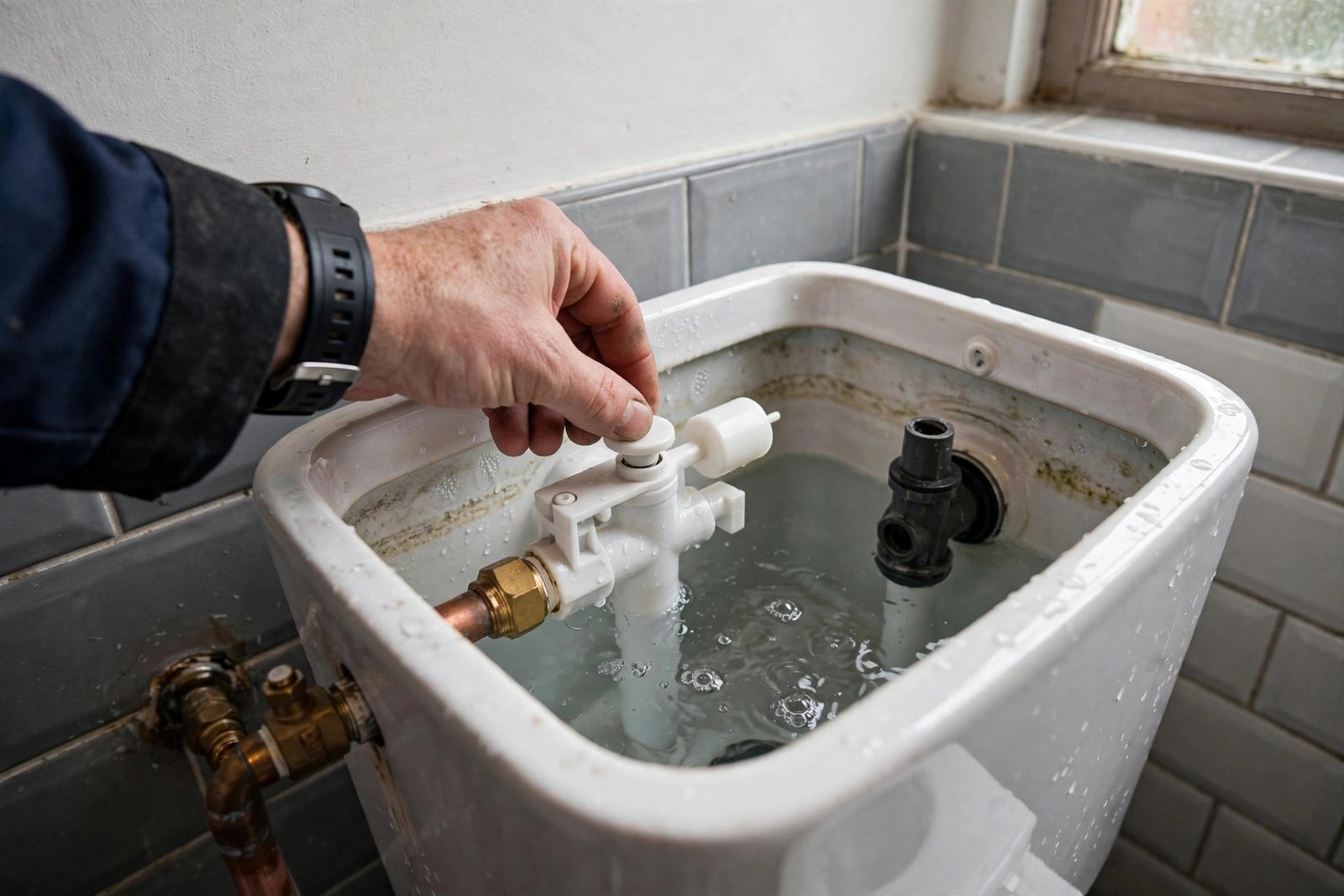
A toilet that runs constantly — water hissing into the bowl long after the flush — is easy to ignore and expensive to leave. Usually the cause is a single worn part inside the cistern costing a few pounds to replace.
This guide explains why toilets run, how much water they waste, how to diagnose the fault, a step-by-step fix, and when to call a plumber.
How a toilet cistern works (in 30 seconds)
Two mechanisms live inside the cistern:
- The flush valve (with a flapper or seal at the bottom) holds water in. When you flush it lifts, water rushes into the bowl, then it drops back to seal.
- The fill valve (with a float) refills the cistern. The float rises with the water and shuts the valve off at the right height.
A running toilet means one of these two is not doing its job: water is either leaking past the flush valve into the bowl, or the fill valve is not shutting off and water is escaping down the overflow.
Why your toilet keeps running: the common causes
- Worn flapper or flush valve seal — the rubber seal hardens, warps or limescales up (common in Crawley’s hard water) and stops sealing, so water trickles into the bowl.
- Faulty fill valve — grit or wear stops the valve closing fully, so water keeps flowing in and draining away down the overflow.
- Float set too high or stuck — the water level rises above the overflow and the cistern constantly drains. Sometimes the float arm is just bent or catching on the cistern wall.
- Cracked or misaligned overflow pipe — water finds its way out below the intended level.
- Limescale build-up — hard water crusts up valves and seals, stopping them seating properly.
- A chain or linkage that is too short or tangled — on older siphon-style cisterns, the flush mechanism can jam slightly open.
How much water does a running toilet waste?
A faulty seal can waste 200 to 400 litres of clean water a day — dozens of flushes you never asked for. On a metered bill that adds up fast. If your bill has jumped with no other change, check the toilet first.
Diagnosing the fault: the food colouring test
Before you take anything apart, find out where the water is going:
- Remove the cistern lid and note the water level. It should sit about 25mm below the top of the overflow pipe.
- Add a few drops of food colouring (or a dark squash) to the cistern water — not the bowl.
- Wait 15 minutes without flushing.
- If colour appears in the bowl, water is leaking past the flush valve seal — the flapper or seal needs attention.
- If the cistern water level has risen and water is flowing into the overflow pipe, the fill valve or float is the problem.
This two-minute test tells you exactly which part to fix.
Step-by-step: fixing a running toilet
You will need a sponge or old towels, an adjustable spanner, and the replacement part (flapper/seal or fill valve — £5 to £20 at a DIY shop; take the old one to match).
- Turn off the water to the cistern. Most modern toilets have a small isolation valve on the supply pipe behind or beside the pan — turn it a quarter-turn. If there is none, turn off the mains stopcock (see how to turn off your water supply).
- Flush the toilet to empty the cistern, and sponge out the remaining water.
- If the flush valve seal is leaking: unclip the flapper or unscrew the flush valve, clean the seating surface of limescale with a cloth and descaler, and fit the new seal or flapper. Make sure it sits flat with no twists.
- If the fill valve is faulty: unscrew the water supply connection and the retaining nut under the cistern, lift out the old fill valve, and fit the new one at the correct height — the critical level mark on the valve should sit above the overflow pipe top.
- Check the float. Whether it is a ball float on an arm or a built-in cup float, make sure it moves freely and shuts the valve off with the water level about 25mm below the overflow.
- Turn the water back on slowly, let the cistern fill, and watch. The fill should stop cleanly, the water level should hold steady, and the bowl should stay quiet.
Flush two or three times to confirm everything works, then check again after an hour — some slow leaks only show over time.
When to replace the internals vs call a plumber
Replacing a flapper or fill valve is a solid DIY job. But call a professional when:
- The cistern is concealed — built into furniture or a wall-hung frame, where access means removing panels and one wrong move cracks the unit.
- Parts are seized or corroded — old brass fittings that will not budge often shear off, turning a £10 part into a bigger job.
- The toilet is very old — matching parts for 20-year-old cisterns can be a hunt; a plumber will know what fits or whether replacement internals make sense.
- The flush mechanism is a dual-flush unit — these have more parts and tighter tolerances; misassembly is common.
- Water is leaking from the base or the supply connection — that is a different fault that needs proper diagnosis.
- You have fixed it and it still runs — a cracked cistern, a warped seating surface or a hairline fracture needs experienced eyes.
A plumber carries universal internals on the van and can usually sort a running toilet in a single visit — often cheaper than two trips to the DIY shop for the wrong parts.
Stopping it happening again
- Do not drop bleach blocks or harsh chemical cleaners in the cistern — they degrade rubber seals and shorten the life of every part inside.
- In hard-water areas, descale the cistern internals once a year when you do your other maintenance.
- Fix small issues early: a toilet that occasionally “phantom flushes” is telling you the seal is starting to go.
For more everyday faults and fixes, see our round-up of the most common plumbing problems in Crawley homes.
Silence the hiss for good
A running toilet will not fix itself, and every day it runs is water and money wasted. Whether it is a worn seal, a tired fill valve or a cistern that has simply had enough, it is a quick job for someone who does them every day.
Plumb Buster is Crawley’s local plumber, open 24 hours a day across Crawley, Horsham, Horley and East Grinstead. Call 07908 948654 any time for toilet repairs done properly, or get in touch online — and see our full plumbing services for everything else we fix.